
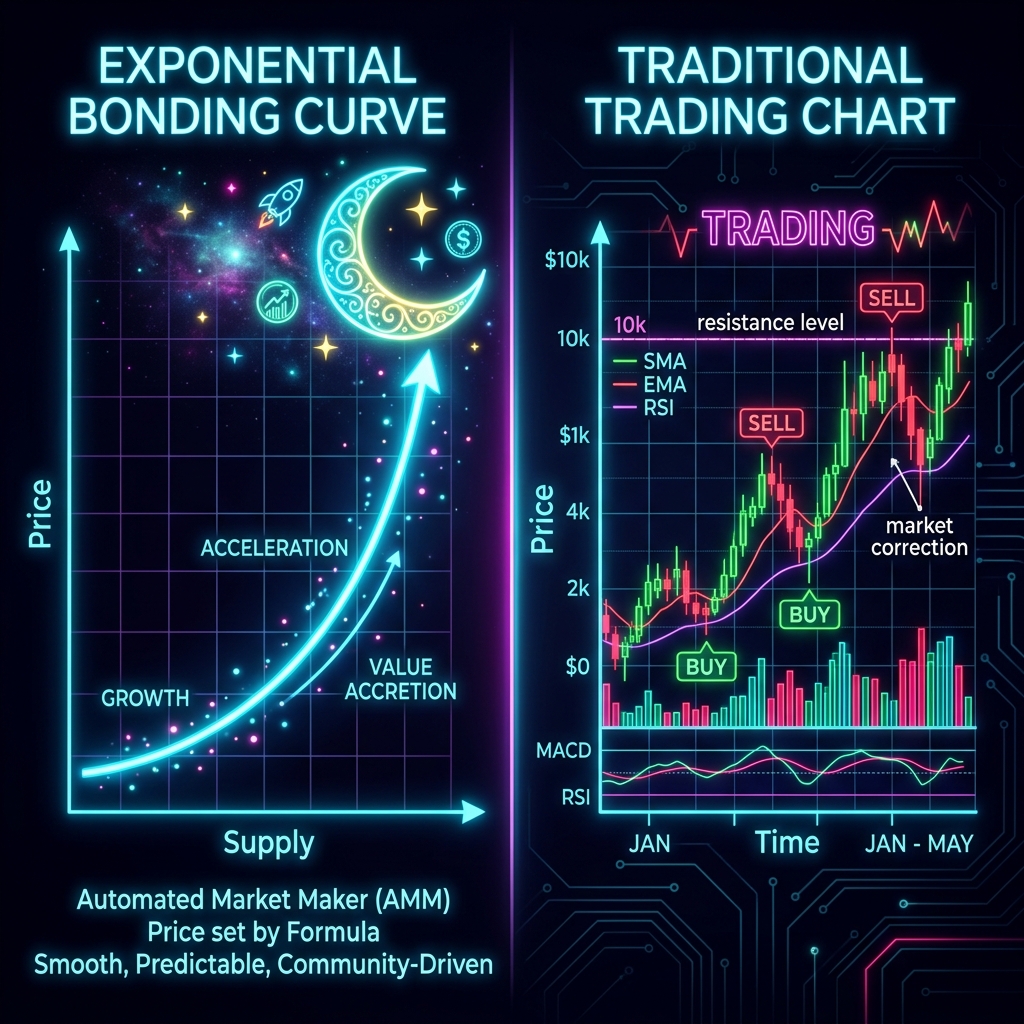
Two Paths to Market: Bonding Curves vs. AMM Pools
For Solana token traders, understanding the playground is half the battle. When a token goes live, it either starts its life on a launchpad like Pump.fun using a bonding curve, or launches directly on a traditional AMM like Raydium or Orca. Both mechanisms have profoundly different implications for slippage, security, and market dynamics.
Key Differences at a Glance
| Feature | Pump.fun Bonding Curve | Traditional DEX (Raydium) |
|---|---|---|
| Initial Liquidity | Virtual (calculated mathematically) | Physical (SOL deposited by Dev) |
| Rug Risk | Very Low (No LP to pull) | High (Dev can pull liquidity if unlocked) |
| Price Discovery | Gradual, predictable along curve | Highly volatile, prone to instant spikes |
| Sniper Bot Impact | Muted (Curve limits massive single buys) | Extreme (Bots can buy 90% of pool instantly) |
Which is Better for Traders?
Bonding curves offer a far safer environment for retail traders because they eliminate the risk of a developer instantly removing the liquidity pool. However, traditional DEXs offer higher liquidity depth and support larger order sizes. Knowing when a token is about to complete its bonding curve and migrate to Raydium is one of the most profitable indicators utilized by high-frequency sniper bots.


